
The Secret Hair Technique Behind Anne Hathaway's Youthful Glow Lift Hack

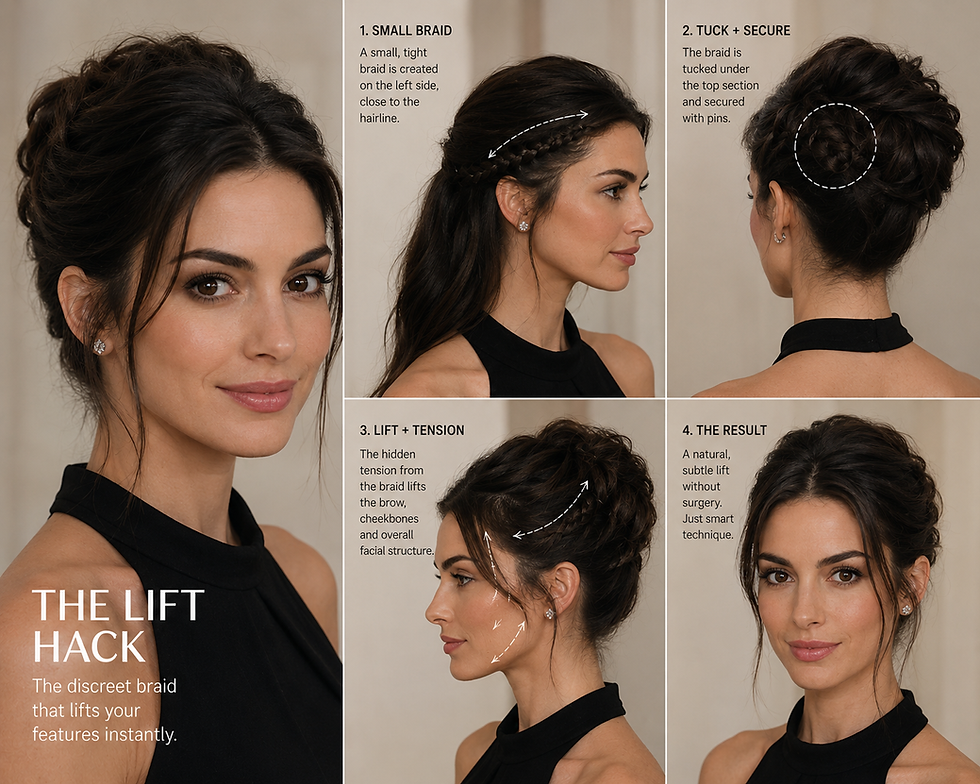
Everyone online has been buzzing about Anne Hathaway’s remarkably lifted and youthful look lately. Facelift? Fillers? Filters? While many focus on cosmetic procedures or digital enhancements, there’s a hairstyling secret that deserves attention. As a hair artist, what caught my eye was a subtle yet powerful technique that plays a major role in this transformation: discreet tension braids placed around the temple area and pulled strategically underneath the hair to create a natural lifting effect on the face.
This technique reveals the true power of hair beyond simple styling. Hairdressers today do much more than arrange strands; they shape perception, sculpt energy, and influence how light interacts with the face. This post explores how hairstyling can create visible lifting effects, why education in hair architecture matters, and the responsibility that comes with mastering these techniques.
How Hair Creates the Illusion of a Lifted Face
Hair can change the way facial features appear without any invasive procedures. The tension braids around Anne Hathaway’s temples work by gently pulling the hair upward and backward, which subtly lifts the skin and muscles around the face. This effect:
Frames the cheekbones to make them appear higher and more defined
Opens the eye area, making the eyes look brighter and more awake
Softens or sharpens facial contours depending on braid placement and tension
Changes face proportions by adjusting ponytail or bun placement
This technique is a perfect example of how hairstyling can influence visual perception. It’s not just about hair; it’s about creating a balanced, harmonious look that enhances natural beauty.
The Role of Visual Architecture in Modern Hairstyling
Understanding shape, balance, and visual architecture is becoming essential for hair professionals. This means knowing how hair interacts with the face’s natural lines and light to create desired effects. For example:
Volume placement can elongate or shorten the face
Direction and tension in styling can mimic a facelift without touching the skin
Face-framing layers can soften harsh angles or add definition
These principles require more than technical skill—they demand an artistic eye and a deep understanding of how hair shapes identity and confidence. Hairdressers are now visual architects who design not just hairstyles but moods and impressions.
The Importance of Subtlety and Responsibility
While tension braids and similar techniques offer exciting possibilities, they must be used carefully. Excessive tension over time can damage the hairline and scalp, leading to hair loss or breakage. The artistry lies in knowing when less is more and balancing tension with hair health.
Professional hairstylists should educate clients about the risks and benefits of these styles. Using tension braids occasionally for special occasions is safe, but daily use or extreme pulling can cause long-term damage. Responsible styling means prioritizing hair health while achieving the desired look.
Why This Trend Matters Beyond Beauty
What fascinates me most about this trend is how it highlights hairstyling as a form of transformation that goes beyond aesthetics. Hair is psychology, illusion, design, and identity. It influences how others perceive us and how we feel about ourselves.
In today’s visual world, hairdressers hold more power than ever to create emotion and confidence through their craft. This technique reminds us that hair is not just beauty—it’s visual architecture that shapes how we present ourselves to the world.
Practical Tips for Trying Tension Braids at Home
If you want to experiment with this lifting effect, here are some tips:
Use soft tension to avoid pulling too hard on the scalp
Braid close to the temple and pull the braid underneath the hair rather than outward
Secure with small, discreet pins or elastics
Combine with a ponytail or bun placed slightly higher on the head
Avoid daily use to protect hair health
For best results, consult a professional hairstylist who understands facial shapes and hair architecture.
Hairstyling is no longer just about managing hair. It’s about shaping identity, confidence, and perception through subtle design choices. Anne Hathaway’s youthful glow is a perfect example of how a hidden hairstyling technique can create a natural lift and transformation without surgery or fillers. As hair artists, embracing education and responsibility in these techniques will help us continue to innovate while protecting hair health.


Comments