.avif)
Decoding Hair Colour Numbers: What Do They Really Mean?

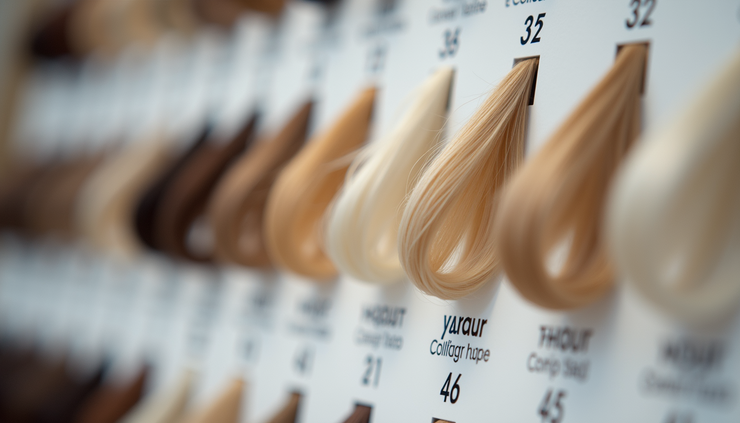
Changing your hair colour can be exciting, but the numbers on hair colour charts often feel confusing. Understanding what these numbers represent helps you make informed choices and communicate clearly with your colourist. This guide breaks down the meaning behind hair colour numbers and explains how they relate to your natural hair and desired shade.

Understanding Hair Colour Levels
Hair colour charts use a level system to describe the depth or darkness of hair colour. This system typically ranges from 1 to 10:
1 is the darkest, representing black hair.
5 corresponds to light brown.
6 is dark blonde.
7 is blonde.
10 is the lightest blonde.
These numbers help your colourist identify your natural base colour and decide how to achieve your desired shade. For example, if your natural hair is a level 4 (medium brown), and you want a level 7 (blonde), your colourist will plan the process accordingly.
What Is a Natural Base Colour?
Your natural base colour is the starting point for any hair colouring process. It reflects the natural pigment in your hair before any chemical treatment. Colourists assess this base colour in-salon to understand how light or dark your hair is and what tones are present.
Knowing your natural base colour helps predict how your hair will react to colour treatments. For instance, darker hair may require bleaching before applying a lighter shade, while lighter hair might only need a toner to adjust the tone.
What Does the Base Colour Number Mean?
The first number in a hair colour code indicates the base colour level. This number shows how light or dark the shade is. For example:
A colour labelled 5 means the base colour is light brown.
A colour labelled 8 means the base colour is light blonde.
This number is crucial because it sets the foundation for the overall shade. When you choose a colour, you are selecting a base level that matches or changes your natural hair depth.
Understanding the Secondary Numbers and Letters
After the base colour number, you might see additional numbers or letters. These represent the tones or reflections in the hair colour. Tones add warmth, coolness, or other effects to the base colour.
Here are some common tone indicators:
.1 or Ash: Adds cool, blue or green undertones to neutralize warmth.
.3 or Gold: Adds warm, golden tones.
.4 or Copper: Adds reddish or copper tones.
.6 or Red: Adds strong red tones.
For example, a colour labelled 7.3 means a level 7 (blonde) base with golden tones.
How Hair Colour Numbers Affect Your Result
The combination of base colour and tone numbers determines the final look. If you want a natural blonde with warm highlights, you might choose a 7.3. If you prefer a cooler, ash blonde, 7.1 would be better.
Your colourist uses these numbers to mix the right formula. They consider your natural base colour, hair condition, and desired outcome to create a shade that suits you.
Practical Examples
If your natural hair is level 4 (medium brown) and you want to go lighter, your colourist might use a level 7 or 8 shade with ash tones to avoid brassiness.
For someone with level 6 (dark blonde) hair wanting a richer look, a 6.4 (dark blonde with copper tones) can add warmth and depth.
If your hair is naturally level 2 (dark brown) and you want a dramatic change to light blonde, the process will involve lifting the colour several levels before applying the desired tone.
Why Understanding Hair Colour Numbers Matters
Knowing what the numbers mean helps you:
Communicate your preferences clearly with your colourist.
Understand the process and what to expect.
Choose colours that complement your skin tone and style.
Avoid surprises by knowing how light or dark your new colour will be.
Tips for Choosing the Right Hair Colour
Always consider your natural base colour before selecting a shade.
Think about the tone you want: warm, cool, or neutral.
Ask your colourist to explain the numbers and what they mean for your hair.
Remember that going lighter often requires more steps and care.
Use colour charts as a guide, but trust professional advice for the best results.


Comments